
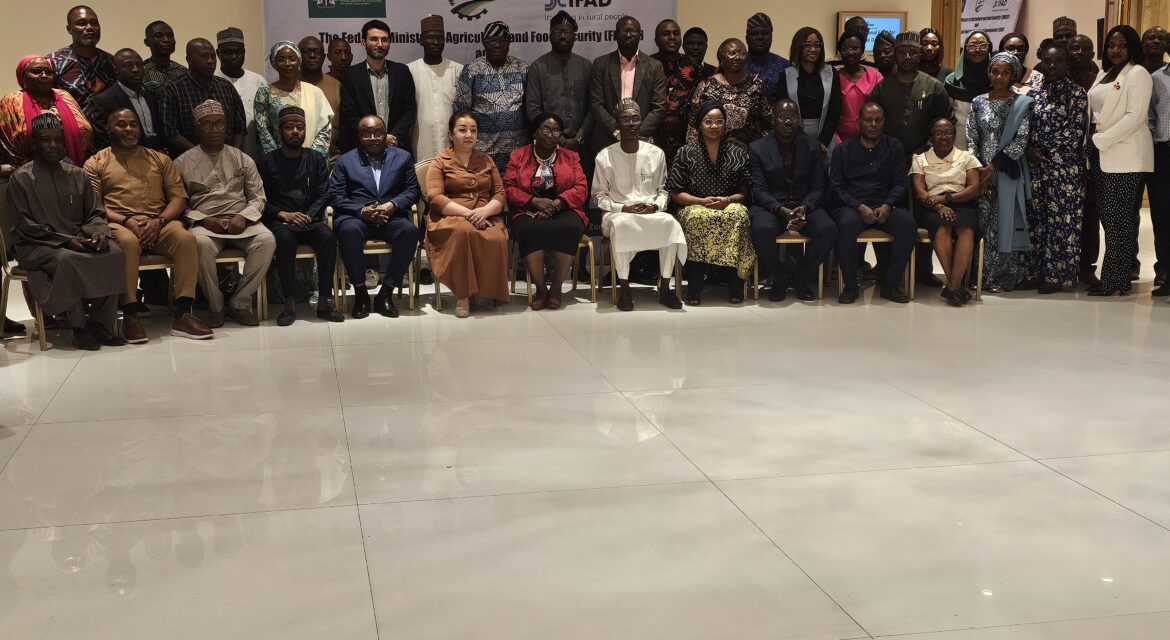
The Federal Government of Nigeria and the International Fund for Agricultural Development (IFAD) have jointly launched the Second Supervision Mission for the Special Agro-Industrial Processing Zones (SAPZ) Programme to accelerate implementation and strengthen accountability across participating states.
Speaking at the inception workshop in Abuja, Mrs. Iluromi Adebola, Director of the Department of Development Partners Projects (DDPP), described SAPZ as a flagship initiative designed to shift Nigeria from exporting raw commodities to becoming a globally competitive agro-processing nation. She emphasized that the mission will critically assess progress, address bottlenecks, and reinforce coordination among stakeholders.
In her remarks, IFAD Country Director for Nigeria, Mrs. Dede Ekoue, reaffirmed IFAD’s commitment to Nigeria’s food systems transformation, highlighting that the SAPZ has moved from planning to delivery with key achievements recorded. These include the profiling of 41,204 smallholder farmers and value chain actors in Ogun and Kano States, and support provided to 15,664 beneficiaries representing 15.8% of the programme’s 100,000 Life-of-Project target.
Ekoue noted the success of the SAPZ’s 4P (Public–Private–Producer Partnership) model, which has secured 24 MoUs linking farmers in priority value chains to processors, while nearly 16,000 farmers are now accessing digital climate information services.
National Programme Coordinator, Dr. Kabir Yusuf, reaffirmed the government’s commitment to accelerating the rollout of agro-industrial zones, stressing that domestic processing is key to reducing foreign exchange losses, creating jobs, and driving food security under the Renewed Hope Agenda. He called for increased support to expand SAPZ implementation beyond the currently supported states.
The joint mission is expected to produce an updated action plan to fast-track delivery of processing zones, strengthen partnerships, and deepen the programme’s impact on rural livelihoods